

The study results are a "really big deal," because something so
low-tech can help so many, says Dr. Bruce Roth, a cancer expert from
Washington University in St. Louis and ASCO spokesman. "You can buy a
lot of vinegar for $100,000, " says Roth.
The fact that local women who received training administered the test
is also "a big public health benefit," says ACSO president Dr. Sandra
Swain.
The study was funded by National Cancer Institute, part of the National Institutes of Health.
The results were striking.
Almost 90% of the women participated in the
trial (in the United States, overall adult participation in clinical
trials is 3%). Shastri says they found a 31% reduction in cancer deaths
by using this vinegar test, suggesting that if implemented nationwide,
it could prevent more than 22,000 cervical cancer deaths each year.
This
type of screening program could also be implemented in other developing
countries and, Shastri says, possibly reduce the overall number of
cervical cancer deaths each year by an estimated 72,000.
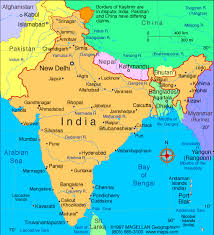
Unfortunately we have no cervical cancer screening program in India,"
where it's the number-one cancer killer among women, says lead study
author Dr. Surendra Srinivas Shastri, "mainly because pap
smear screening is not feasible." Shastri attributes lack of a
resources, laboratory infrastructure and trained medical staff. A pap
smear requires growing the cells from a sample and having a pathologist
analyze them.
As a result, Shastri says, the cervical cancer incidence and
mortality in India alone contributes to 30% of the global burden of this
disease.
They borrowed a tried-and-true method called
visual inspection with acetic acid (VIA), where the cervix is swabbed
with a 4% vinegar solution. This is something doctors in poor and rich
countries do as part of a procedure called a
colposcopy.
Gynecologists in the United States use this type of test for
visualization in a colposcopy, says Dr. Carol Aghajanian, a
gynecological expert from Memorial Sloan-Kettering Cancer Center in New
York and ASCO spokeswoman. "What's new here is that it's being used as a
screening tool."
Local women were trained for four weeks on how to administer the
test, since doctors and nurses are in short supply in many areas of
India.
Within just one minute, the person administering the test - using the
naked eye and a light - can see if there are abnormal cells on the
surface of the cervix; abnormal cells turn white, because the acid in
the vinegar makes protein in the nucleus of the abnormal cells coagulate
and become easily visible.
The fact that results are available immediately rather waiting for


![According to the Salvation Army, [gay parents] deserve death.](https://lh3.googleusercontent.com/blogger_img_proxy/AEn0k_sNoMssveSjkWh9r4YaIZZ8RK55rsP54eDbxegtQrRkHLY6I-WZV981D6XinFJh3XYPtRTH7Jae3XsSfAByAB1x7cFf0jOpqu5lo8pFZiA7dN0RBb2JS4JKOI8ocWemrKH-kFqlY2skqxeUF6LYqjhbzWoCQJWbuByCM4LGWreIBxqZQRpFZCeU0JjVddpV0p_ACl3n8grojx2iX8_8BlpWIARaWo9BFHK73A=s0-d "According to the Salvation Army, [gay parents] deserve death.")
